Karnataka's state government notified the Greater Bengaluru (Amendment) Regulations, 2026 (Ref: UDD 235 MNJ 2025(E)) on January 5–6, 2026. It is the most significant overhaul of Bengaluru's zoning framework in years — and it affects every architect, developer, and planning consultant working in the Greater Bengaluru Area (GBA).
If you have an active project in Bengaluru, you need to re-audit it against these rules immediately. Here is what changed.
What Changed
Height Limits
The permissible height in residential zones has been raised from 11.5 m to 15 m. Critically, a stilt floor of up to 3 m is now excluded from the height calculation — meaning you can effectively build taller before triggering the 15 m cap.
Apartments on Smaller Plots
Apartments are now permitted on plots as small as 200 sq m (40x60 ft), with up to 6 dwelling units allowed. For larger plots — 360 sq m and above in Ring I and Ring II — there is no upper limit on apartment units, subject to FAR and setback compliance.
This is a substantial policy shift. Previously, apartment development on sub-300 sq m plots was effectively prohibited or severely restricted. Smaller plot owners now have genuine redevelopment optionality.
Setbacks Relaxed
Setback norms have been reduced across the board. The clearest example: 20x30 ft plots now require only a 0.7 m front setback, 0.6 m side setbacks, and the rear setback has been removed entirely.
For mid-size plots, the reduced setbacks translate directly into more buildable area — even without FAR increasing.
Mechanized Parking
Mechanized and hydraulic parking systems are now permitted for plots up to 6,000 sq m without requiring ramps. This typically saves 10–15% of construction cost on constrained urban plots where ramp space was eating into usable floor area.
Sustainability Requirements
Setback areas must remain unpaved and permeable to support groundwater recharge. Basements are prohibited in flood-prone areas. Both rules are non-negotiable — and violations will affect plan sanction.
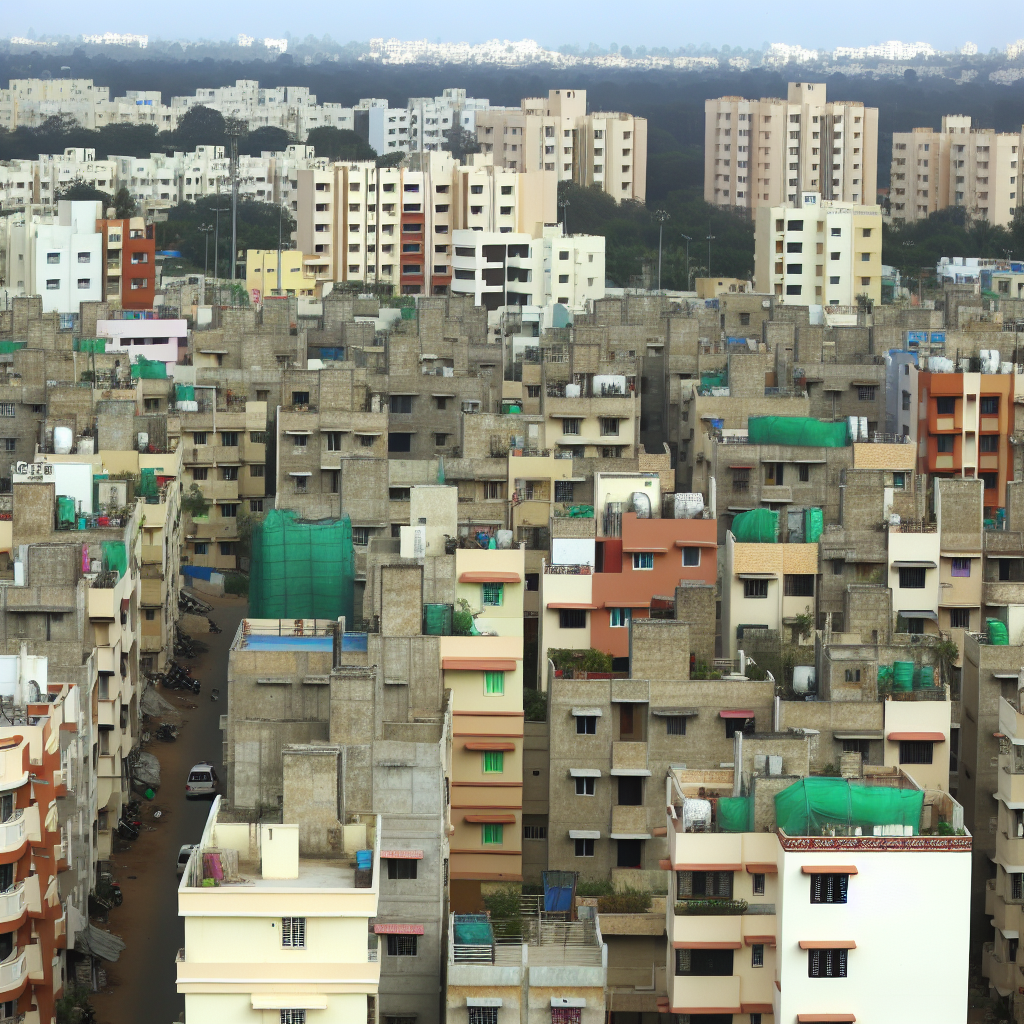
What Did Not Change
FAR remains at 1.75 across GBA.
This is the crucial tension point. Many of the relaxations above — particularly the removal of rear setbacks and the raised height limit — are practically limited by the unchanged FAR. On a 200 sq m plot at 1.75 FAR, you have 350 sq m of permissible floor area across all floors. The new rules give you more design freedom in how you distribute that area, but they do not increase the total mass.
Several developer associations have already begun lobbying for FAR revision. Watch this space.
Who Is Affected
The amendment applies immediately to all new construction and pending applications across all three GBA planning rings. Completed buildings are grandfathered in — they are not required to retrofit for compliance.
If your project received plan sanction before January 6, 2026, confirm with your liaison at BBMP or BDA whether the pending application was already approved or is still in process. Applications under review at the time of notification fall under the new rules.
The full notification text (UDD 235 MNJ 2025(E)) is available through the Karnataka Urban Development Department.

The Practical Impact
For architects: revise your standard setback templates for Bengaluru projects. The old rear setback assumptions on small plots are no longer valid. Apartment typologies on 40x60 plots become viable for the first time and will likely generate client interest.
For developers: the 6-unit cap on 200–359 sq m plots sets the density ceiling for small-plot aggregation plays. Projects on 360 sq m+ plots in Ring I and II have no unit cap — only FAR and height control the outcome. This changes the math on land acquisition for apartment projects in established residential layouts.
For planning consultants: the 9 m road width requirement for all apartment developments is now a hard condition. Site selection in older layouts with narrower roads must account for this constraint before feasibility analysis begins.
What Zoneity Tracks
Zoneity's regulatory intelligence engine continuously indexes amendments like the GBA 2026 notification across all three planning rings — setback tables, height limits, road width thresholds, and FAR values are queryable by plot size and zone type within seconds.
If you are re-auditing an active project or evaluating a new site in Bengaluru, subscribe to amendment alerts to stay ahead of further changes.